

How to understand a patent claim – a guide for tech leaders

As a patent owner or someone responsible for patents within your business, it’s essential you understand what your patent(s) do and do not cover. This means you need to look at the patent claims in detail and compare them to your products. If you don’t then you might just have bought an expensive white elephant and it may have negative consequences down the track.
In this blog, I set out some general guidance on how to read a patent claim and come away with some understanding of what the hell it’s going on about! The take home points are that you (possibly with your patent attorney) need to:
- Look carefully at every feature in at least Claim 1 of your patent
- Ask yourself whether all the products you would like to protect include all of those features
- If they do not then they might not be protected – talk to your patent attorney
- Do this regularly as products evolve, but patents do not
It’s important to say here that patents or patent applications differ and this blog is not legal advice specific to your situation. What is offered here is some generalised guidance and a few tips that are intentionally kept high level to be understood by business leaders.
You should always get advice from a patent attorney before making decisions relating to your patent portfolio.
In practical terms, if you want to understand what is covered by your patent(s) then you need to read your patent claims very carefully. You at least need to read and understand the first of those claims – Claim 1 – as that sets out the scope of the protection that your granted patent will give you. It tells you what is and is not protected.
Broadly speaking, you need to read each feature of claim 1 (at least) and understand that for any product to be covered by your claim then it must include each one of those features. That means that if products you sell do not include all of those features then they might not be protected, and if a competitor sells a product that does not include all of those features then you probably cannot stop them selling it.
So let’s set up a scenario to illustrate the point…
A tech business, Innovator Ltd., has a patent and a couple of products – they believe their products are protected by the patent. After grant of the patent, their competitor, Copy Cats & Co., begins to sell a product that Innovator thinks is a copy of one of their products – Innovator wants to stop Copy Cats from selling it.
Innovator’s product
Innovator has developed and sells two charging stands called MagStand and MagStand Pro – both are able to wirelessly charge a mobile phone. When they developed the MagStand products they considered the configuration of magnets that hold the mobile phone in place on the stand to be innovative. This feature is in both the MagStand and MagStand Pro. Additionally, the MagStand Pro has other features like a rotatable pillar that allows adjustment of the orientation of the mobile phone during charging.
The MagStand is by far the most successful of their products and accounts for 73% of sales.
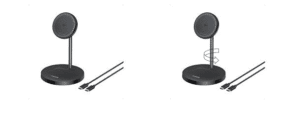
MagStand MagStand Pro
*Images are of an Anker product that is unrelated to the issues discussed in this blog post
Innovator’s patent claim
Innovator Ltd, obtained a granted patent to cover their MagStand and MagStand Pro – A simplified example Claim 1 is below.
- A charging stand for a personal electronic device, the charging stand comprising:
a base;
a pillar extending from and connected to the base;
a charging plate connected to a distal end of the pillar for wirelessly charging a personal electronic device, the charging plate comprising a plurality of magnets for retaining the personal electronic device in correct alignment with the charging plate during charging, wherein the pillar is rotatably connected to the base.
Copy Cat’s product
Copy Cat sells a competing product that is identical to the MagStand. The pillar is not rotatably connected to the base.
The situation
Innovator believes that its patent covers the MagStand product range because of the innovative alignment of magnets. Copy Cats has obviously copied the MagStand product and so Innovator believes that they can stop Copy Cats from selling their product.
The executives at Innovator, who were not really involved with the patent process, are stunned to hear their patent attorney say that they cannot do anything about the Copy Cats product.
What happened?
For whatever reason (there are many possible reasons), during the application process, Claim 1 of the patent was amended to include the feature that the pillar is rotatably connected to the base. This meant that the MagStand product was no longer protected by the claim, although the MagStand Pro was.
This significant point was not sufficiently clearly communicated to the executives at Innovator, who have always thought that both products were protected. In reality, anyone was free to copy the MagStand, which is exactly what Copy Cats has done.
What Innovator needed to (but didn’t) do was read their claim in detail to understand the protection they had. Doing this early might have drastically changed their approach. Let’s look at the claim against the products in the table below, which breaks down the features of the patent claim and asks whether each feature is in the MagStand, the MagStand Pro and the Copy Cat – we need ticks in all boxes for the product to be covered by the claim.

You can see in the table that the MagStand does not have the feature of the rotating pillar. This product, which accounts for 73% of Innovator Ltd.’s sales, is therefore not protected by the patent.
Similarly, the Copy Cat does not have the rotating pillar and so it does not infringe the patent.
The MagStand Pro does have the rotating pillar and so it is covered by the patent, but there is no corresponding Copy Cats product that infringes.
Take homes
The take homes if you’re responsible for patents within your company are that you need to read patent claims in detail and always be asking whether every feature is in the products you sell.
You need to do that all the way through the application process so that you know what you are getting protection for, and what you’re not.
After the patent is granted, it is still worth looking at the claims in detail fairly regularly because your products may well change over time. If they change in such a way that means they fall outside the scope of the patent then that is something worth knowing.
If you’d like a quick chat free of charge to discuss your own patents and whether they cover your products then drop us a line and we’ll schedule something.
Steve Blake


